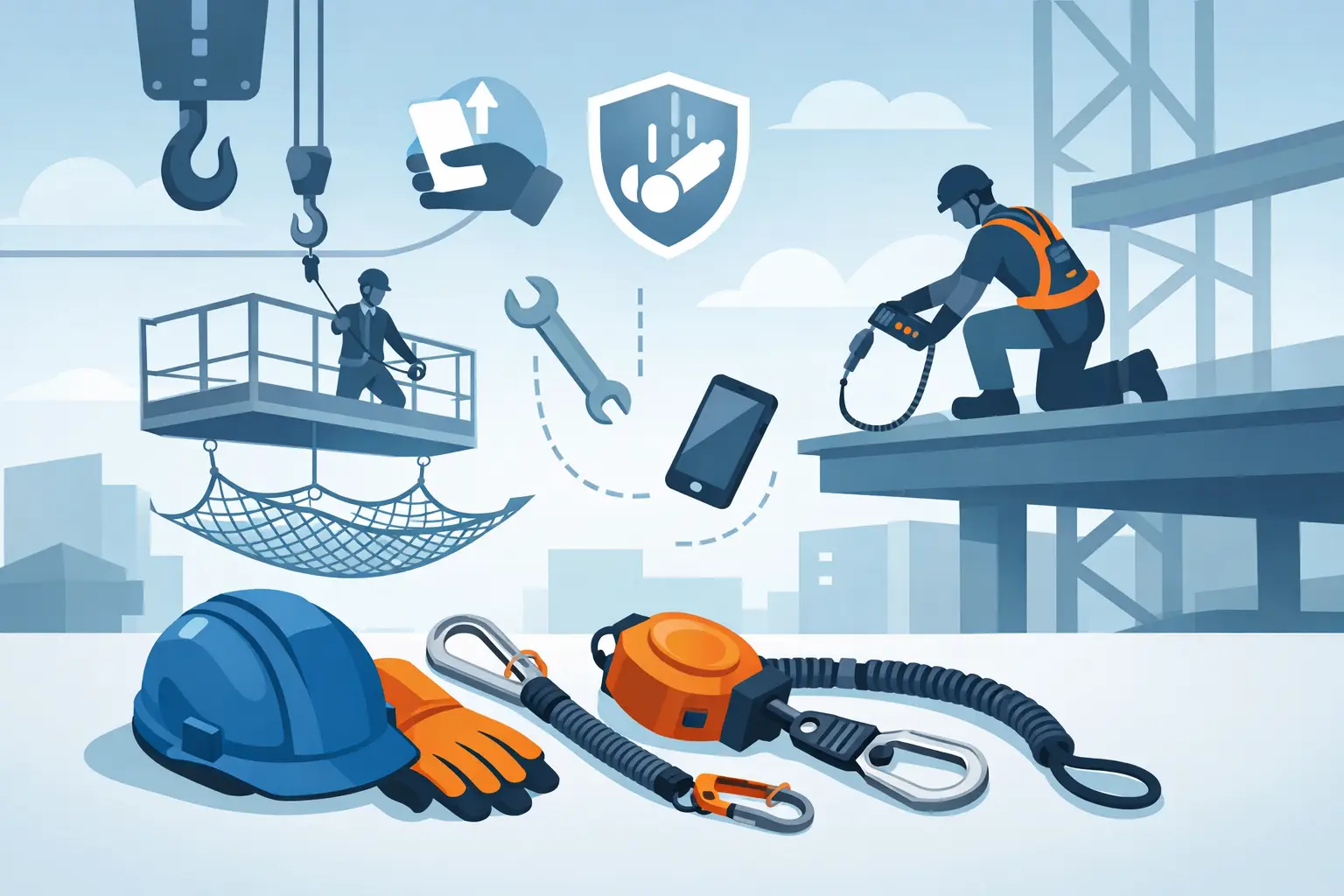
How to Choose Drop Prevention Systems
Learn how to choose drop prevention systems for tool control with the right risk assessment, attachment method, load rating and site fit.
A dropped spanner from a mezzanine, crane gantry or offshore access platform is not a minor housekeeping issue. It is a high-consequence event with the potential to injure personnel, damage critical plant, stop operations and trigger a wider compliance investigation. When teams need to choose drop prevention systems for tool control, the decision should be treated as an engineered risk-control exercise, not a catalogue purchase.
In practice, that means selecting a system that matches the task, the tool, the working environment and the likely dropped object pathway. It also means recognising that no single product solves every dropped tool risk. A tether may be correct for one maintenance activity, while a pouch, barrier or net is the safer control for another.
How to choose drop prevention systems for tool control
The starting point is the hierarchy of risk on site. Before selecting any equipment, define where tools are used at height, who is below, what assets are exposed and whether the task is routine or intermittent. Tool control in a wind turbine nacelle is different from tool control on a vessel deck, above a live process line or over a public-facing concourse.
This matters because the best system is usually the one that reduces dependence on individual behaviour. If a task can be redesigned so tools are contained within a closed pouch or work zone, that may provide a stronger control than relying only on a tethered hand tool. Equally, where operatives need continuous hand access and freedom of movement, a properly rated tethering system may be the most practical option.
Selection should therefore begin with the application, not the product type. Ask what the tool is, where it is used, how often it is moved, what it could strike if dropped and whether there is a better collective control around the task area.
Start with the dropped object risk profile
A proper assessment goes beyond listing tools by weight. You need to understand fall height, swing path, exclusion zone limits, weather exposure and the potential for rebound or secondary impact. In offshore, maritime and energy environments, dynamic movement can change the behaviour of a dropped object significantly. On public or infrastructure sites, pedestrian interfaces make containment even more critical.
A 1 kg tool dropped from a modest height may still create a severe hazard if it falls into rotating equipment, electrical systems or occupied access routes. Conversely, a lighter tool used in a confined, enclosed maintenance zone may require a different level of control. The system should be proportionate to the actual consequence, not simply the object mass.
Match the system to the task, not just the tool
Tool control often fails when a technically compliant product is impractical in use. If operatives find a tether restrictive when working inside tight plant areas, they may detach it. If a pouch is awkward to access while wearing gloves, tools may end up left unsecured on a platform edge. Good selection depends on how the work is really carried out.
For repetitive maintenance, compact tethering solutions can be effective where anchor points are known and movement is predictable. For installation work involving multiple hand tools and consumables, a structured pouch system can improve containment and reduce the temptation to place items temporarily on grating, handrails or deck plates. In larger overhead work areas, barriers and nets may be required to manage the residual risk from items that are not hand-carried tools at all, such as loose fittings or components.
This is where an application-led approach matters. A tool lanyard by itself is not a complete drop prevention strategy if the broader work area still allows sockets, fixings or small parts to escape containment.
Consider tool type, shape and attachment method
Not every tool accepts the same attachment arrangement. Some hand tools are designed for tethering with integrated connection points. Others require retrofit attachments, which can be suitable if they are properly installed and rated for the tool and working conditions. The wrong attachment method can compromise grip, interfere with tool operation or create a weak point under load.
Tool shape also affects risk. Long tools can swing and strike adjacent structures. Compact tools may be easier to tether but easier to lose inside clothing or open pouches. Powered tools introduce another layer of complexity because their weight, balance and vibration profile differ from standard hand tools.
Attachment should never affect safe use of the tool itself. If a tether causes awkward wrist angles, catches on nearby steelwork or increases snagging near rotating equipment, the control may introduce a new hazard. In those cases, a different anchor location, shorter lanyard, alternative pouch arrangement or task redesign may be the safer option.
Load rating is essential, but not the whole answer
Procurement teams will rightly look for declared load ratings and technical data. That is necessary, but it should not be the only filter. A rated system still needs to suit environmental exposure, user movement and inspection demands.
In corrosive settings, marine exposure and chemical processing environments, material choice matters. Components need to resist degradation from salt, moisture, oils or cleaning regimes. In food and pharmaceutical settings, hygiene requirements may limit what materials and configurations are acceptable. In wind and offshore applications, low weight and secure retention are often as important as nominal strength.
You should also consider the force generated during a drop arrest event. The issue is not only whether the tether survives, but whether the anchor point, tool attachment and user interface can safely manage the dynamic load. Poorly matched components can fail at connection points even when the individual product specification looks adequate on paper.
Compatibility with PPE and workwear
Tool control systems are worn and used in combination with harnesses, gloves, foul weather gear, arc-rated clothing and task-specific PPE. That affects accessibility, dexterity and attachment location. A belt-mounted pouch that works on a workshop floor may be unsatisfactory on a ladder or in a confined marine access point.
This is why site trials are valuable. They reveal whether the chosen arrangement can be used consistently under normal working conditions. The best system is one that remains secure without slowing the task to the point where workarounds become likely.
Think beyond individual tools
Dropped object prevention often breaks down at the edges of the task. Operatives may secure primary tools correctly, yet still handle fixings, meters, torches or small consumables without proper containment. Those smaller items are easy to overlook and are frequently involved in real incidents.
A complete tool control plan should include hand tools, powered tools, accessories and loose parts. It should also define where items are stored during transitions such as climbing, repositioning or moving between workfaces. Many incidents happen in these transfer moments rather than during the main maintenance activity itself.
For this reason, the right answer may be a combination of pouches, tethers, temporary barriers and under-area protection. On higher consequence sites, collective controls should be considered first wherever practical, with personal tool retention supporting rather than replacing them.
Inspection, replacement and compliance discipline
Even well-chosen systems degrade if inspection is weak. Webbing, stitching, connectors and attachment points need defined inspection intervals and clear withdrawal criteria. If teams cannot easily identify damage, contamination or unauthorised modification, the control will weaken over time.
It is also worth checking whether the site has a clear standard for issuing, recording and replacing tool control equipment. Mixed systems from different sources can create compatibility issues and make inspections inconsistent. Standardisation across a facility or fleet can improve compliance and simplify training.
For industrial operators, this is not just about housekeeping. A documented, technically justified selection process supports audits, permit controls and contractor management expectations.
Common mistakes when choosing drop prevention systems for tool control
The most common mistake is buying on unit price alone. Lower-cost products may appear acceptable for light tasks, but if they fail early in service, are awkward to use or require frequent replacement, the lifecycle cost is worse. Downtime, permit delays and incident exposure quickly outweigh any initial saving.
A second mistake is selecting a universal solution for varied work environments. Offshore maintenance, process plant shutdowns, marine deck work and public infrastructure access all have different constraints. A single product family can support multiple tasks, but configuration still needs to be site-specific.
The third mistake is treating dropped tools as an isolated risk. In reality, tool control sits alongside slip resistance, secure access, ladder safety, escape routes and work-at-height planning. A stronger overall safety outcome comes from considering how these controls interact across the working area.
Where sites need support, an experienced supplier can help align drop prevention with broader access and surface safety measures. Real Safety approaches these projects as application-specific controls, with the emphasis on compliance, durability and operational fit rather than product substitution alone.
The right system is rarely the one with the longest specification sheet. It is the one your team will use correctly, inspect properly and trust in the environments where a dropped tool could do real harm.
Similar Articles

Non Metallic Cable Trays for Industrial Environments
Non metallic cable trays for industrial environments. Discover the benefits of corrosion resistance, lower weight, electrical safety, and reduced maintenance.
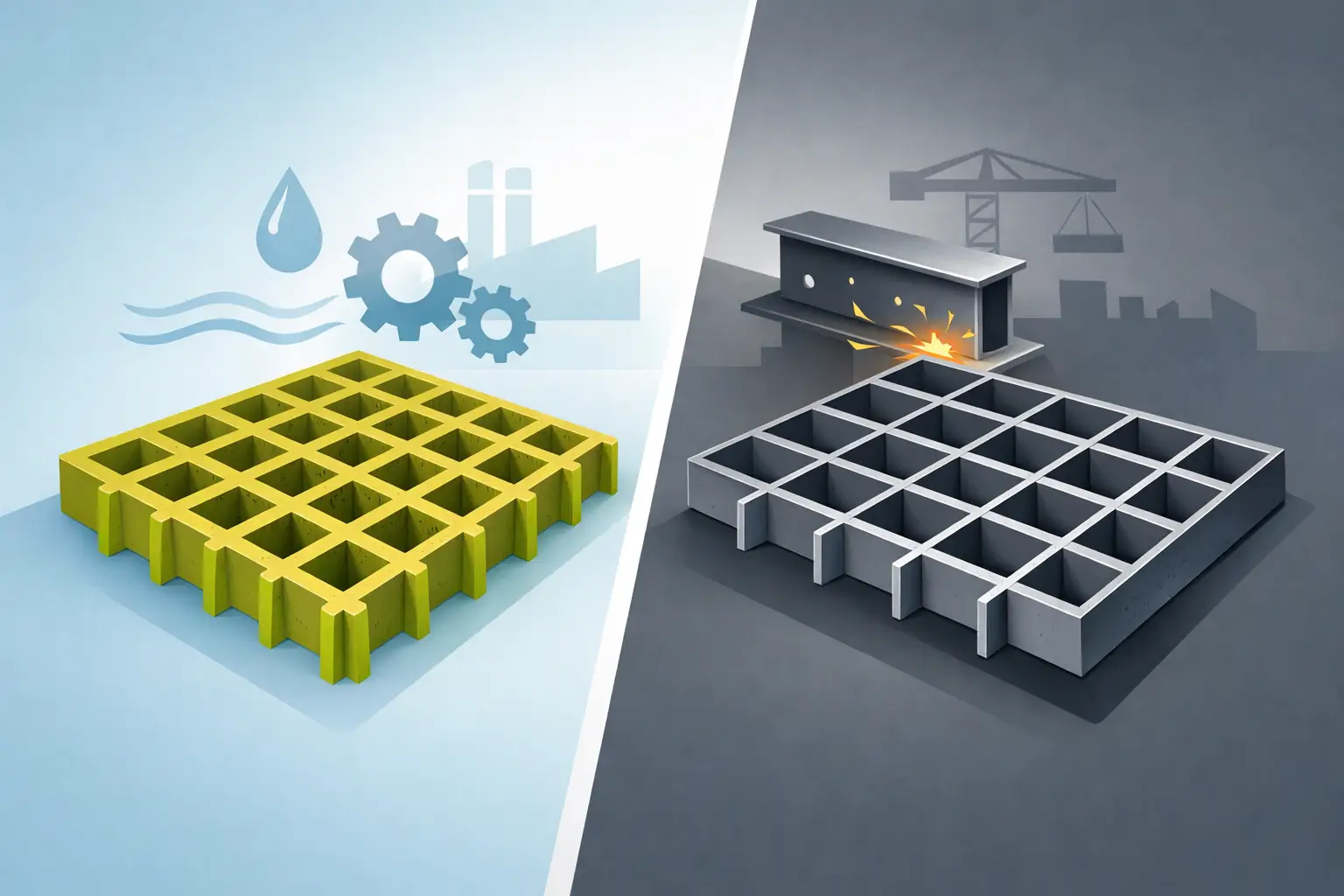
GRP Grating vs Steel Grating: Which Is Safer for Your Workplace?
Choosing between GRP and steel grating? Compare safety, durability, maintenance, and performance for industrial environments.
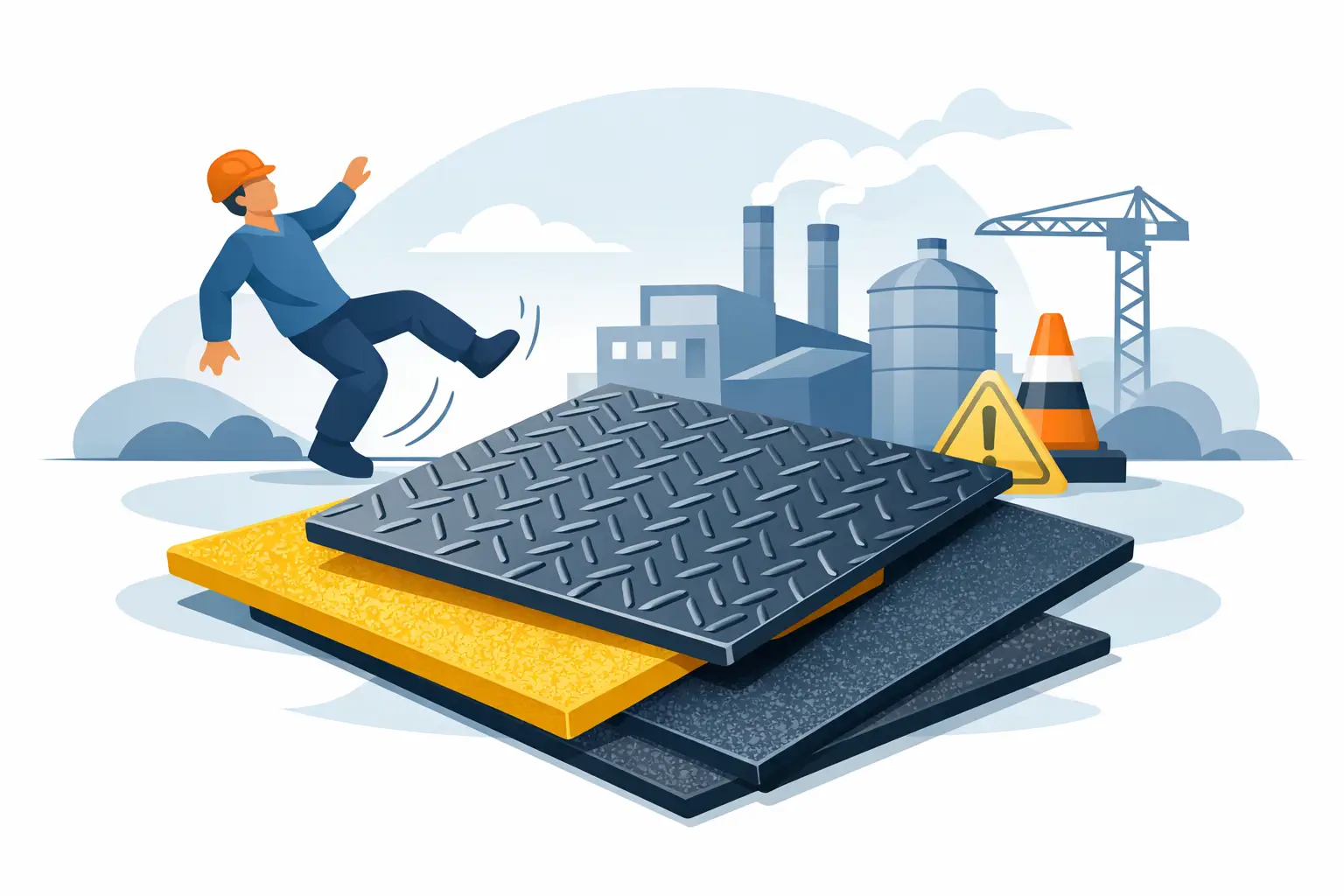
Anti Slip Floor Plates for Industry
Anti slip grp floor plates for industry reduce slips, corrosion issues and downtime across harsh sites with durable, compliant surface upgrades.