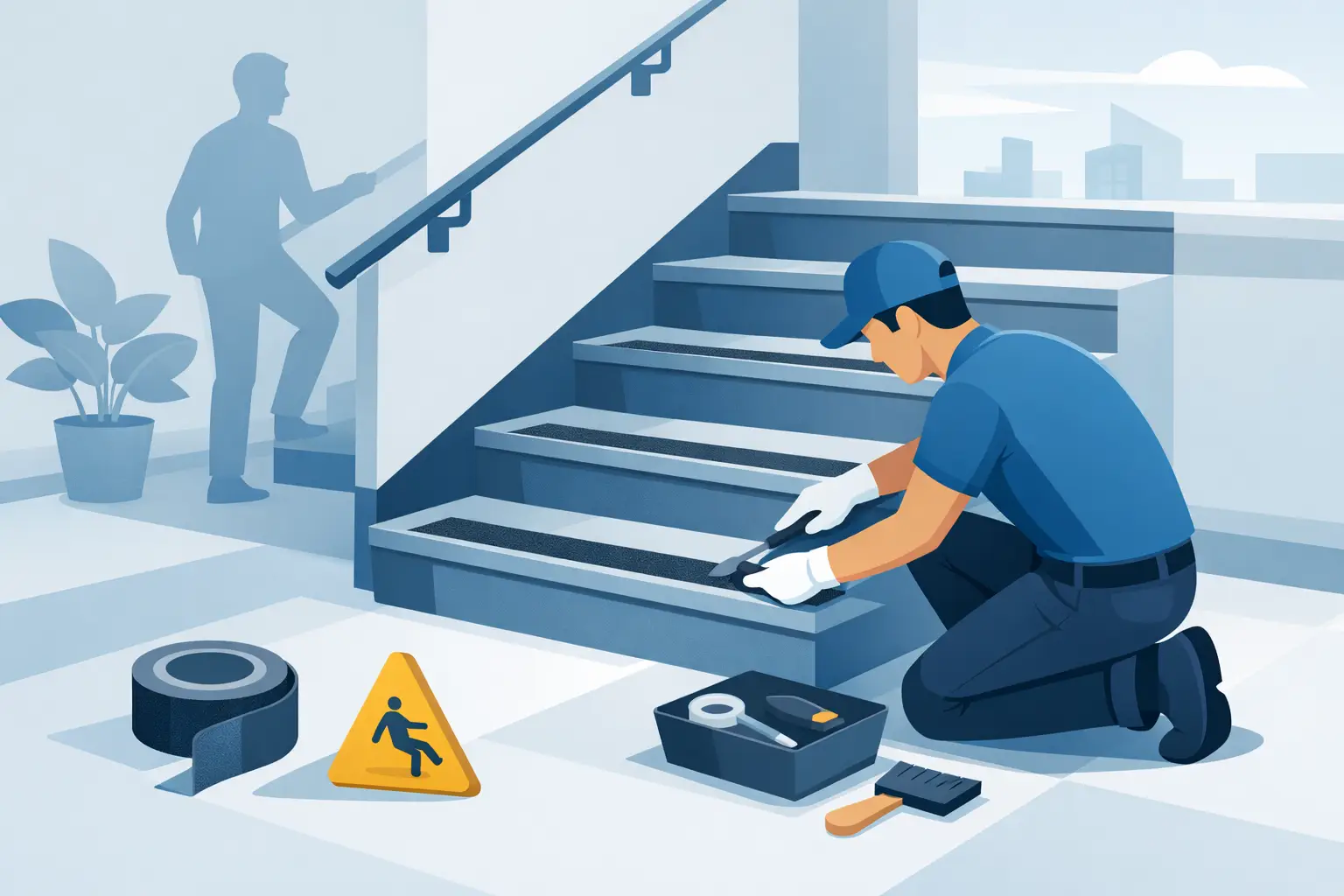
How to Retrofit Anti Slip Stairs Properly
Learn how to retrofit anti slip stairs with the right covers, nosings and fixings to reduce risk, improve compliance and minimise downtime.
A stairway rarely fails all at once. More often, grip declines gradually paint wears smooth, metal edges polish under traffic, water sits where it should drain, and contamination from oil, dust or process residue turns a routine access route into a reportable incident waiting to happen. That is why knowing how to retrofit anti slip stairs matters in operational environments where uptime, compliance and worker safety all carry equal weight.
In most industrial and public settings, retrofit is the practical answer. Full stair replacement is expensive, disruptive and often unnecessary when the underlying structure remains sound. A well-specified anti-slip retrofit can restore traction, improve edge visibility and extend service life without taking major assets out of service.
How to retrofit anti slip stairs without replacing them
The first step is not product selection. It is assessing the stair as an operating risk control rather than a simple building element. You need to understand what the stair is made from, how it is used, what contaminants are present and whether the hazard is limited to the tread surface or includes poor edge definition, corrosion, drainage issues or damaged substrate.
Concrete, chequer plate, timber and steel all behave differently under retrofit. A steel stair in a marine environment may still be structurally adequate but too corroded for direct fixing in isolated areas. A concrete stair in a public venue may have sound risers and landings but worn leading edges that no longer provide secure footing in wet weather. In food and pharma settings, the requirement may extend beyond slip resistance to washdown compatibility and non-corrosive materials.
That is why anti-slip stair retrofits are usually built around one of two routes: stair tread covers that protect the full step area, or step nosings that reinforce and improve grip on the leading edge. The right choice depends on the level of wear, the width of the hazard zone and the environment in which the stair operates.
When stair tread covers are the better retrofit option
Full tread covers are typically the stronger solution where the entire step surface is worn, contaminated or exposed to persistent wet conditions. They provide broad area coverage and create a defined, durable anti-slip surface over the existing substrate. In industrial settings, GRP stair tread covers are often preferred because they are non-corrosive, lightweight and suited to harsh service conditions including chemical exposure, saltwater and heavy foot traffic.
This approach is especially useful on older steel or concrete stairways where replacement would involve shutdowns, hot works or structural intervention. A retrofit cover installed over the existing step can reduce installation time considerably while delivering a consistent slip-resistant finish across the stair flight.
When step nosings are sufficient
If the main issue is loss of grip at the step edge, high-visibility nosings may be enough. Many slips and trips occur at the leading edge, particularly in low light, outdoor weather exposure or fast-paced access routes used during maintenance and inspection. A properly engineered anti-slip nosing can improve both traction and step definition.
Nosings are not a shortcut, though. If the body of the tread is already degraded or contaminated, treating only the front edge may leave the wider hazard unresolved. This is one of the common mistakes in retrofit projects - specifying for what is visible rather than for how the stair is actually used.
Assess the operating environment before specifying materials
A retrofit that performs well indoors may fail quickly offshore, on a process plant or in an exposed transport asset. Material selection needs to reflect the operating environment, not just the stair dimensions.
GRP composites are frequently selected where corrosion is a concern or where a non-metallic, non-conductive solution is advantageous. In energy, maritime and process industry applications, that matters. Steel-based anti-slip components may suit some sites, but in corrosive or chemical environments they can bring a shorter maintenance cycle and more frequent replacement.
You also need to consider contamination type. Water is one issue. Oil, grease, product residue, cleaning chemicals and windblown debris change the duty requirement. A warehouse access stair and a desalination plant stair should not be treated as the same application simply because both are external.
Fixing method affects long-term performance
Mechanical fixing, adhesive bonding or a combination of both may be used depending on the substrate and site conditions. Mechanical fixings generally provide a more secure long-term attachment in demanding industrial environments, particularly where traffic is frequent or temperature variation is significant. Adhesive-only installation can work in some lower-demand situations, but substrate preparation becomes even more critical.
Poor fixing specification is one of the fastest ways to undermine an otherwise correct product choice. If the cover or nosing lifts, gaps or shifts under load, the retrofit introduces a trip hazard rather than removing one.
Surface preparation is where many retrofits succeed or fail
Even the best anti-slip system will underperform if it is installed onto contamination, loose coatings or unstable substrate. Existing stairs should be inspected for corrosion, cracking, delamination, loose edges and uneven wear. Any failed paint, debris or unstable material needs to be removed before installation.
This is also the stage to check tolerances. Older assets are not always square, level or uniform from one step to the next. Where stair tread covers are being fitted across an entire flight, accurate measurement is essential to ensure edge fit, drainage allowance and consistent fixing positions.
In operational facilities, installation planning matters as much as preparation. Retrofit is attractive because it can minimise downtime, but only if the works are sequenced properly. High-traffic stairs, emergency access routes and escape routes may require phased installation, temporary diversions or out-of-hours works.
How to retrofit anti slip stairs in high-consequence sites
In high-consequence environments, retrofit should be treated as part of a wider slip, trip and fall reduction programme. That means looking beyond the stair itself. If a worker approaches the stair from a contaminated walkway, poor-performing landing or badly drained deck area, the risk does not begin on the first step.
The most effective projects align stair retrofits with surrounding access surfaces such as landing covers, walkway covers and deck strips. This is particularly relevant on offshore assets, marine facilities, process plants and public venues with mixed internal and external circulation.
Compliance expectations also vary by site. Some projects are driven by incident response, others by inspection findings, ageing asset strategy or planned safety upgrades. In each case, documentation matters. Buyers and specifiers should expect clear product data, load suitability, fixing details and evidence of performance in comparable applications.
Visibility and human factors matter too
Slip resistance is the primary goal, but visual definition should not be ignored. Contrasting nosings or clearly identified tread edges can improve user perception of each step, especially in low-light, wet or emergency egress conditions. On public-facing stairs and high-footfall facilities, that added visual cue can reduce missteps as well as slips.
The correct level of contrast depends on the environment. In hygiene-critical facilities, the balance may be between visibility and cleanability. In industrial areas, the priority may be maximum edge definition under grime and variable lighting.
Common retrofit mistakes to avoid
The most expensive mistake is assuming any anti-slip product is suitable for any stair. Consumer-grade strips or coatings may appear cost-effective initially but often fail under industrial traffic, harsh cleaning regimes or corrosive exposure. A retrofit should be selected for lifecycle value, not just first cost.
Another common error is retrofitting only the visibly damaged steps. If the entire stair flight is exposed to the same conditions, partial treatment can create inconsistent grip and maintenance complexity. Likewise, installing over an unsound substrate simply conceals deterioration that will reappear later.
It also pays to avoid treating the stair as an isolated procurement line. If the site has repeated incidents across stairs, walkways and ladders, a coordinated anti-slip strategy will usually deliver better operational control than piecemeal fixes.
Choosing a retrofit system that lasts
A durable anti-slip retrofit should reduce incidents, stand up to the actual site conditions and avoid creating a maintenance burden of its own. For many operators, that means engineered components with proven anti-slip performance, corrosion resistance and a service life that justifies planned installation.
In practice, the strongest results come from matching the product to the hazard with precision. Full tread covers for worn or contaminated steps. Nosings for edge-risk applications. GRP composites where corrosion, conductivity or weight matter. Secure fixings, proper substrate preparation and installation planned around access continuity.
For teams managing ageing assets, the right retrofit can do more than improve footing. It can extend the usable life of existing stairs, reduce reactive maintenance and strengthen compliance across the wider access route. Where that work needs to be engineered around sector-specific demands, application-led support from a specialist supplier such as Real Safety often makes the difference between a temporary fix and a reliable long-term control.
A good stair retrofit should be unremarkable once installed. People use it, keep their footing and move on with the job - which is exactly what safe access infrastructure is supposed to do.
Similar Articles

Non Metallic Cable Trays for Industrial Environments
Non metallic cable trays for industrial environments. Discover the benefits of corrosion resistance, lower weight, electrical safety, and reduced maintenance.

GRP Grating vs Steel Grating: Which Is Safer for Your Workplace?
Choosing between GRP and steel grating? Compare safety, durability, maintenance, and performance for industrial environments.
Anti Slip Floor Plates for Industry
Anti slip grp floor plates for industry reduce slips, corrosion issues and downtime across harsh sites with durable, compliant surface upgrades.