
Rotary table anti slip mats for rig safety
Choose and specify a rotary table anti slip mat that cuts slip risk on rig floors - materials, fixings, drainage, compliance and lifecycle value.
Mud on boots, atomised oil on steelwork, and vibration underfoot can quickly turn a rig floor into a high-risk slip environment. The rotary table area is particularly critical — it must provide secure footing where people step, brace, and handle equipment, without creating trip edges, rotation interference, or snag risks.
A rotary table anti-slip mat is more than a simple consumable; it is a risk-control solution that should be specified with the same care as any rig floor upgrade. It must perform under contamination, load, housekeeping, and geometric constraints — and remain reliable when operations are at their busiest.
What a rotary table anti slip mat must achieve
The primary goal is reliable traction in high-risk slip zones, maintaining grip even when exposed to water, mud, drilling fluids, or oil film. Surface texture alone is insufficient — effective drainage and contaminant shedding are equally important to prevent clogging and smearing.
Stability is also critical. The mat must not creep, curl, or compress underfoot, as movement can create trip hazards or affect balance during load handling or sudden motion.The solution must support operations. It should not obstruct clearance, trap debris, complicate washdown, or interfere with inspection routines in the rotary table area.
Start with the hazard picture, not the catalogue
Before specifying a mat, map the real exposure. Rotary areas often experience shifting contaminants — water and mud early in the shift, followed by oil film or drilling fluids, and eventually heavy washdown. If slips occur during movement around the table, prioritize surfaces that maintain traction under motion, not just when standing.
Consider who uses the area. Footwear type and sole condition vary across crews, so solutions that rely on specific tread patterns may perform well in trials but less consistently in practice.
Load resistance is also important. Rotary table zones experience point, rolling, and impact loads. The mat must balance flexibility and durability — avoiding deformation, cracking, or sharp-edge failure under operational and cleaning conditions.
Material choice: where “anti-slip” can go wrong
Most anti-slip failures on rig floors are not because the concept is wrong, but because the material and surface system do not match the environment.
Rubber-style mats may provide good initial grip but can degrade, soften, or trap contaminants under chemical exposure. Abrasive-coated surfaces offer strong traction, but only if the binder and aggregate are designed for wet, oily, and washdown-heavy conditions.
GRP-based anti-slip systems are often used in harsh environments for corrosion resistance and stable traction, but require proper edge detailing and secure installation.
There is no universal “best” material — the right choice is the one that maintains friction under your contaminants, cleaning regime, and operating cycle.
Thickness, edges, and the “trip versus grip” balance
The rotary table anti slip mat has to provide enough surface profile to work when wet, but not so much thickness that it becomes an obstacle. This is where many retrofits fail: a high-profile mat with a proud edge can create a trip line in exactly the area where people step quickly.
Edge design should be part of the specification from the start. Tapered, beveled, or recessed installations help avoid raised lips. In some cases, a thinner, rigid anti-slip surface with controlled grit can be safer than a soft, high-profile mat that may curl or shift.
Also ensure smooth traction transitions between the mat and adjacent flooring. Sudden changes from anti-slip surfaces to painted steel can create slip risk.
Fixing methods: loose-lay rarely survives rig reality
Loose-lay mats may offer quick installation, but vibration, washdown, and heavy traffic can cause migration, turning a control measure into a hazard.
For rotary areas, a secure fixing strategy is usually required. Mechanical fixings must suit the substrate and corrosion environment, while avoiding snag risks. Bonded installations provide a cleaner profile but depend on correct adhesive selection and surface preparation. A system approach — combining suitable surface material, fixing method, and edge detailing — helps prevent lift, creep, and peeling.
Drainage and cleanability: traction must be repeatable
Rig floors do not stay clean. The question is whether the anti-slip performance is repeatable after contamination and washdown.
Look for surfaces that shed water, mud, and oil quickly without trapping cuttings or becoming a grit reservoir during pressure cleaning. Avoid designs where pooling water or debris creates temporary low-friction zones.
For rotary table zones, think about what happens during a fast washdown. If water and contaminants pool on the mat, you get a temporary low-friction state right when people step back into the area. A surface that sheds water quickly and does not hold an oily film typically performs more consistently.
Also ensure the surface does not release loose aggregate or dust under wear, as this can migrate to nearby access areas.
Compliance and performance: specify what you can verify
HSE and engineering teams should look beyond generic “anti-slip” claims and focus on verifiable performance under real operating conditions.
Look for documented traction performance, chemical resistance against drilling fluids and oils, and clear guidance on installation and inspection. If behaviour under wet and contaminated conditions is unclear, the risk is harder to control.
Also consider fire performance, smoke toxicity, and compatibility with escape route marking if the area is safety critical.
Common failure modes in rotary table areas
Most issues start at the edges and interfaces, where lifting corners, curling, or local debonding can create trip hazards. Small movements each shift can eventually misalign mats from safe stepping zones.
Surface glazing is often caused by contaminant buildup or unsuitable texture performance under oil film rather than simple wear. Overcleaning to compensate can sometimes accelerate degradation.
Also watch for operational interference — mats that snag tools, boots, or hoses may cause crews to walk around them, reducing safety effectiveness.
Getting the specification right for your site
A practical way to reduce rework is to treat the rotary table anti slip mat as a defined package: target area geometry, thickness and edge detail, fixing method, and surface type designed for your contaminant profile.
That package should also include inspection criteria. Define what “end of life” looks like - not just visible damage, but loss of traction, edge lift, or bond line deterioration. When the criteria are agreed upfront, maintenance teams can act before a near miss becomes an incident.
If you are standardising across assets, consider whether the same surface system can integrate with adjacent controls such as walkway covers, stair nosings, ladder rung covers, and marked escape routes. Consistency improves user behaviour, but it must not ignore local differences in contamination and duty.
For industrial operators who want a composite-led, engineered approach to anti-slip in high-risk environments, Real Safety provides GRP anti-slip systems and application-led support across rig floors, access routes and decks - see https://Realsap.com.
Closing thought
If a rotary table area is only “safe when it is clean”, it is not controlled. Specify a mat that stays stable, grips when contaminated, and cleans down predictably - and you will reduce slips without trading them for trips or downtime.
Similar Articles

Offshore Stair Retrofit Case Study
Offshore stair retrofit reduced slip incidents case study showing how GRP stair covers improved grip, cut risk exposure and supported compliance.

What are GRP composites used for in industry?
What are GRP composites used for in high-risk sites? See where GRP improves grip, corrosion resistance and compliance on stairs, walkways and ladders.
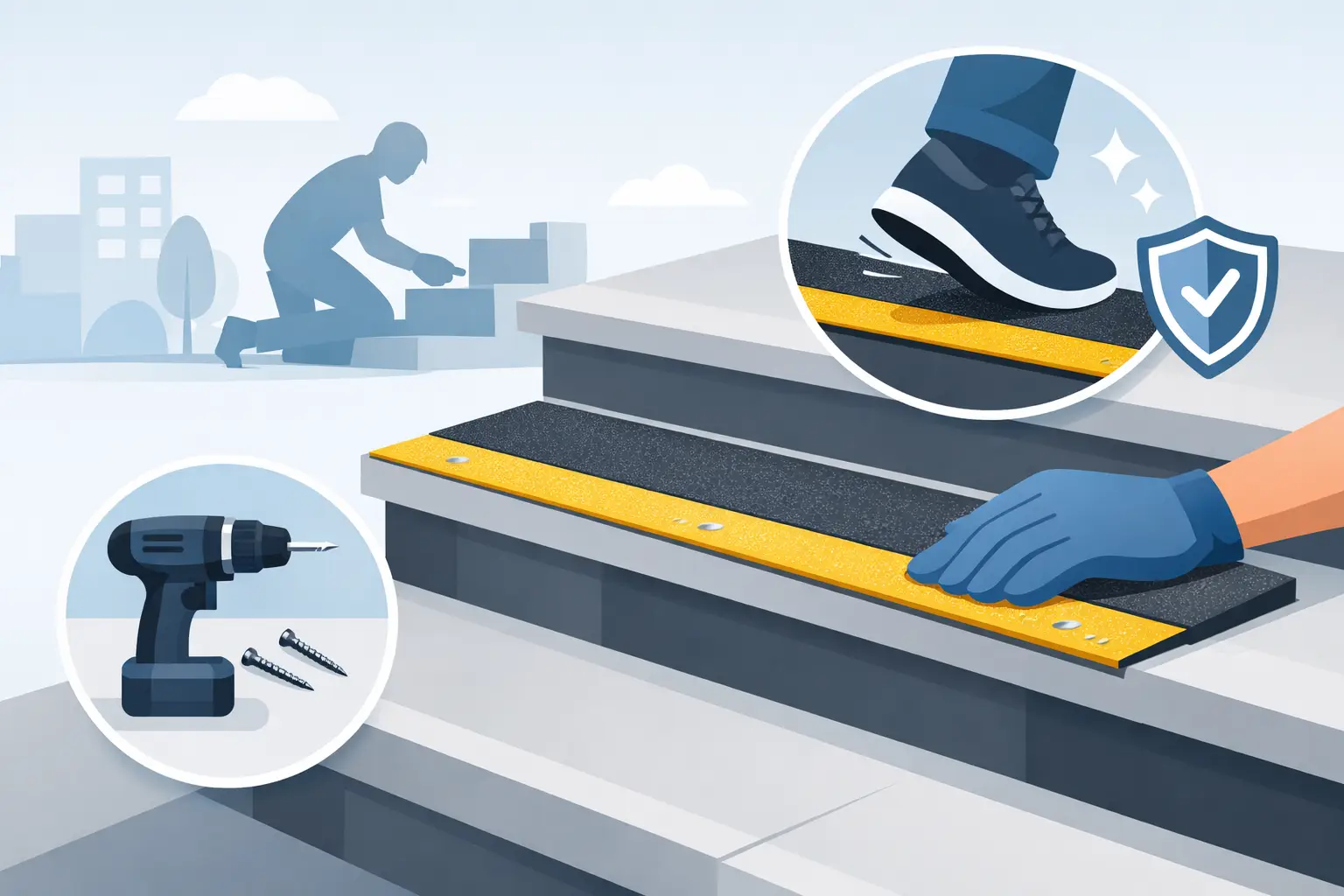
How to Install GRP Anti Slip Stair Treads
Learn how to install GRP anti slip stair treads safely and correctly for industrial stairs, with fixing methods, prep steps, and key checks.