
Maintenance Free Anti Slip Systems Lifecycle Cost
Understand maintenance free anti slip systems lifecycle cost, from installation and downtime to service life, compliance and replacement risk.
A stair tread that costs less on day one can become the more expensive choice by year three. That is usually where the conversation around maintenance free anti slip systems lifecycle cost needs to start - not with unit price, but with the total burden placed on the asset, the maintenance team, and the safety programme.
For HSE, engineering, and procurement teams, anti-slip specification is rarely a cosmetic upgrade. It is a risk control applied to stairs, walkways, ladders, landings, deck areas, escape routes, and process access points where slips, trips, and falls carry operational, financial, and compliance consequences. In those settings, the right comparison is not coating versus cover, or GRP versus metal in isolation. It is the full cost of ownership across service life.
What maintenance free anti slip systems lifecycle cost really includes
Lifecycle cost is often reduced to supply and installation. That misses the factors that tend to drive spend after handover. A more accurate model includes initial product cost, installation labour, access requirements, downtime, inspection burden, cleaning compatibility, corrosion exposure, repair frequency, replacement intervals, and the cost of incidents avoided.
In harsh industrial environments, these variables diverge quickly. A painted or grit-applied surface may appear economical at specification stage, but if it requires periodic reapplication, local patching, surface preparation, permit-controlled access, or repeat shutdown windows, its true cost rises well beyond the purchase order value. By contrast, a properly selected GRP anti-slip system fixed onto an existing substrate may carry a higher upfront cost while reducing recurring intervention over a much longer period.
That is the practical meaning of maintenance free in this context. It does not mean zero inspection, because no safety-critical surface should be ignored. It means the system is not expected to need routine refurbishment to maintain performance in normal service.
Why the cheapest anti-slip option often costs more
Short-life anti-slip treatments usually fail in familiar ways. Bonded aggregates wear smooth in traffic lines. Coatings debond from contaminated or corroded substrates. Steel components deteriorate in marine, chemical, or washdown conditions. Fixings loosen where thermal movement, vibration, or poor substrate condition have not been accounted for.
Each failure mode creates direct and indirect cost. Direct cost includes replacement materials, labour, access equipment, permit administration, and reinstatement. Indirect cost is often larger. It includes interrupted production, restricted access routes, delayed maintenance tasks, contractor coordination, and renewed exposure to slip risk while remedial works are planned.
For offshore assets, process plants, ports, and transport infrastructure, the cost of bringing a small area back into service can outweigh the value of the anti-slip product itself. Where hot works are restricted, access is difficult, or shutdown windows are tightly controlled, repeat intervention is rarely a minor issue.
Maintenance free anti slip systems lifecycle cost in harsh environments
The strongest case for maintenance-free systems appears where the environment actively destroys conventional materials. Saltwater exposure, chemical splash, standing water, oils, cleaning agents, freeze-thaw cycles, and heavy footfall all accelerate degradation.
This is where non-metallic GRP composites change the cost equation. They do not rely on paint systems for corrosion protection, they are lightweight for easier handling, and they can be designed to provide durable anti-slip performance without frequent recoating or surface rebuilding. On steel stairs, concrete walkways, timber decks, and ageing access structures, retrofit covers and treads can extend the usable life of the underlying asset without the cost of full structural replacement.
That point matters for asset owners managing ageing infrastructure. If the choice is between repeated temporary treatment of a deteriorating walking surface and installing an engineered cover system over the existing substrate, the better value often sits with the solution that reduces future intervention and preserves access integrity for longer.
Where lifecycle cost is won or lost
Most anti-slip systems are not judged only by how they perform on installation day. They are judged when the site is wet, dirty, heavily used, and under maintenance pressure six months later.
Service life is one factor, but not the only one. Installation method can materially affect project cost. Systems that can be installed onto existing surfaces with minimal substrate removal reduce labour and downtime. That can be decisive on live sites where access routes cannot be closed for long.
The cleaning regime also matters. In food, pharma, and process settings, the wrong surface profile can trap contamination or deteriorate under aggressive washdown. A lower-cost system that complicates hygiene control is not lower cost in practice. Equally, in public or transport environments, anti-slip products must withstand high traffic while retaining a clean, consistent walking surface that does not create trip edges or premature wear points.
Then there is inspection and maintenance planning. If a system regularly needs touch-up work, edge repair, local bonding, or corrosion treatment, the maintenance team inherits an ongoing task. If it performs as a stable installed control with only routine safety inspection, that labour can be directed elsewhere.
A practical way to assess lifecycle cost
For procurement and engineering teams, the most useful comparison is usually a five to ten year view. That timeframe is long enough to expose whether a low-entry-cost solution genuinely remains economical.
Start with the installed cost, not just the product cost. Include access equipment, surface preparation, permit controls, and time out of service. Then model the expected intervention rate. Ask how often the system will require repair, replacement, recoating, or re-bonding in the actual site conditions rather than ideal ones.
After that, account for operational disruption. A stair tower on a process plant, a gangway on a vessel, or an escape route in a public venue cannot always be taken out of use without consequence. If remedial work creates restricted access, reduced throughput, or temporary risk controls, there is a real cost attached.
Finally, test the specification against compliance and incident exposure. A lower-performing surface that deteriorates early can create audit findings, near misses, and injury potential. Those costs are harder to forecast precisely, but they are not theoretical.
Product selection should follow the hazard, not a generic standard
There is no single anti-slip product that suits every environment. Stair nosings, full stair tread covers, landing covers, walkway covers, deck strips, ladder rung covers, and escape route markings solve different problems and should be costed accordingly.
A narrow deck strip may be entirely suitable for a defined pedestrian path with a stable substrate. It may be the wrong choice for a badly worn steel stair where full tread encapsulation would provide better long-term control. Likewise, a vessel deck, an offshore rig access point, and a food production stair all present different combinations of contamination, cleaning demand, traffic pattern, and substrate movement.
That is why lifecycle cost depends on correct application engineering. Over-specifying wastes capital. Under-specifying usually creates a maintenance problem disguised as a saving.
What buyers should ask before approving a system
The useful questions are straightforward. What is the expected service life in this environment? What routine maintenance is required to retain anti-slip performance? Can the product be installed over the existing substrate? How does it behave under corrosion, chemical exposure, washdown, and heavy traffic? What warranty is offered, and what site conditions affect it?
Buyers should also ask for evidence from comparable sectors. A marine walkway, a desalination plant stair, and an onshore energy asset may have different layouts, but they share environmental pressures that reveal whether a product is genuinely engineered for long-term use.
Application-led suppliers are usually better placed to answer these questions than catalogue-only vendors. The cost model improves when the selected system matches the hazard zone, substrate condition, and operational constraints from the outset. That is the approach taken by Real Safety at https://Realsap.com, where anti-slip and GRP composite systems are specified around use case, service environment, and lifecycle performance rather than initial price alone.
The commercial case is stronger when downtime is expensive
Maintenance free anti slip systems lifecycle cost becomes most persuasive on sites where access interruption is costly or safety critical. Offshore platforms, ports, water treatment works, chemical plants, wind assets, and high-footfall public infrastructure all fit that category.
In these environments, a durable anti-slip system is not simply a surface treatment. It is part of the operating model. It reduces repeat visits, limits exposure to maintenance work at height or over water, and supports safer movement through the asset over time. That lowers the hidden cost around supervision, permits, contractor call-out, and temporary controls.
If the system also avoids structural replacement by upgrading existing stairs or walkways, the financial case improves again. Extending asset life while improving underfoot safety is often a better investment than tolerating decline and budgeting for repeated short-term fixes.
The soundest purchasing decisions usually come from looking one layer deeper than ticket price. When anti-slip performance, corrosion resistance, installation method, and service life are assessed together, lifecycle cost stops being a finance exercise and becomes what it should be - a practical measure of how well a safety control will hold up when the site is under real pressure.
Similar Articles

Non Metallic Cable Trays for Industrial Environments
Non metallic cable trays for industrial environments. Discover the benefits of corrosion resistance, lower weight, electrical safety, and reduced maintenance.
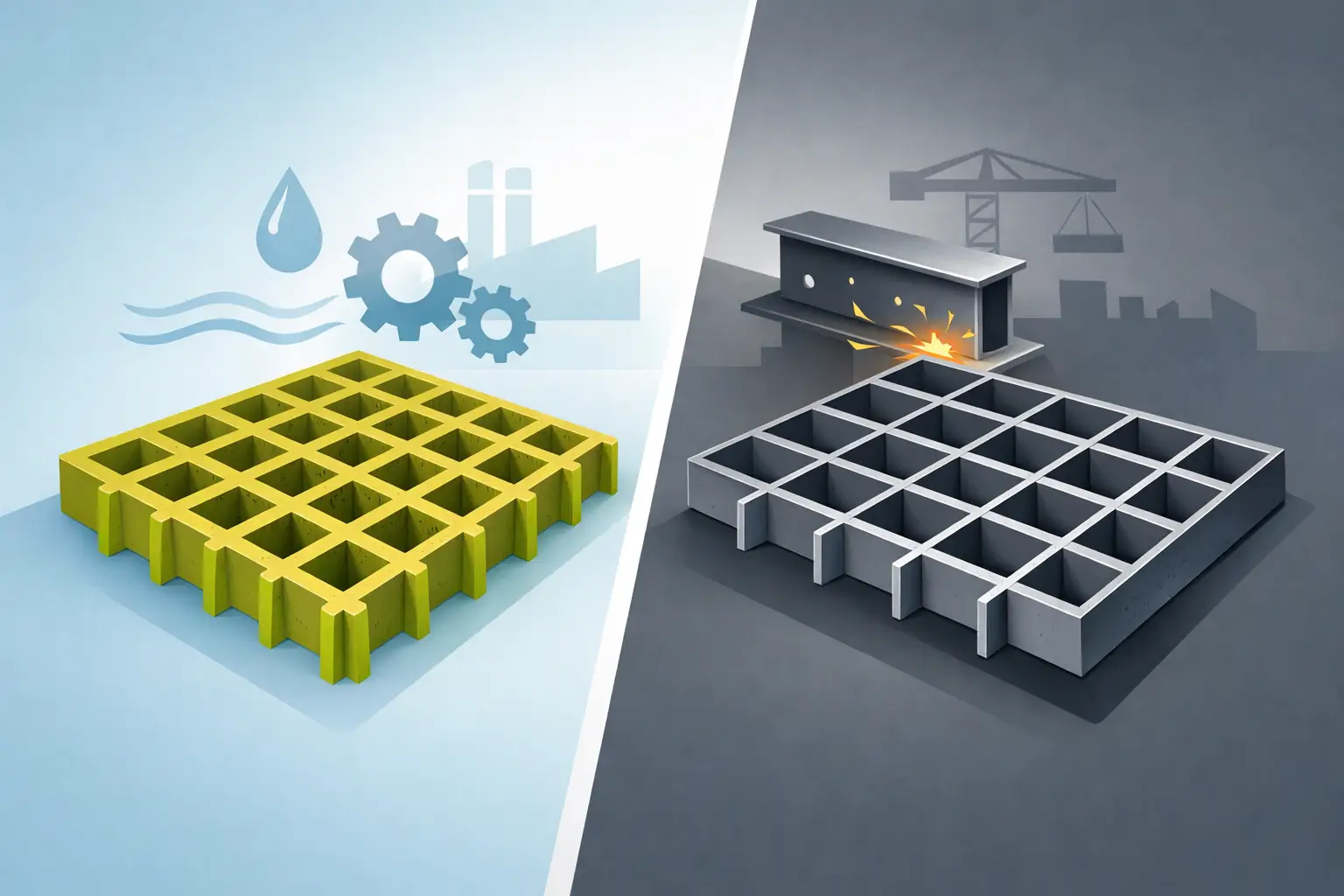
GRP Grating vs Steel Grating: Which Is Safer for Your Workplace?
Choosing between GRP and steel grating? Compare safety, durability, maintenance, and performance for industrial environments.
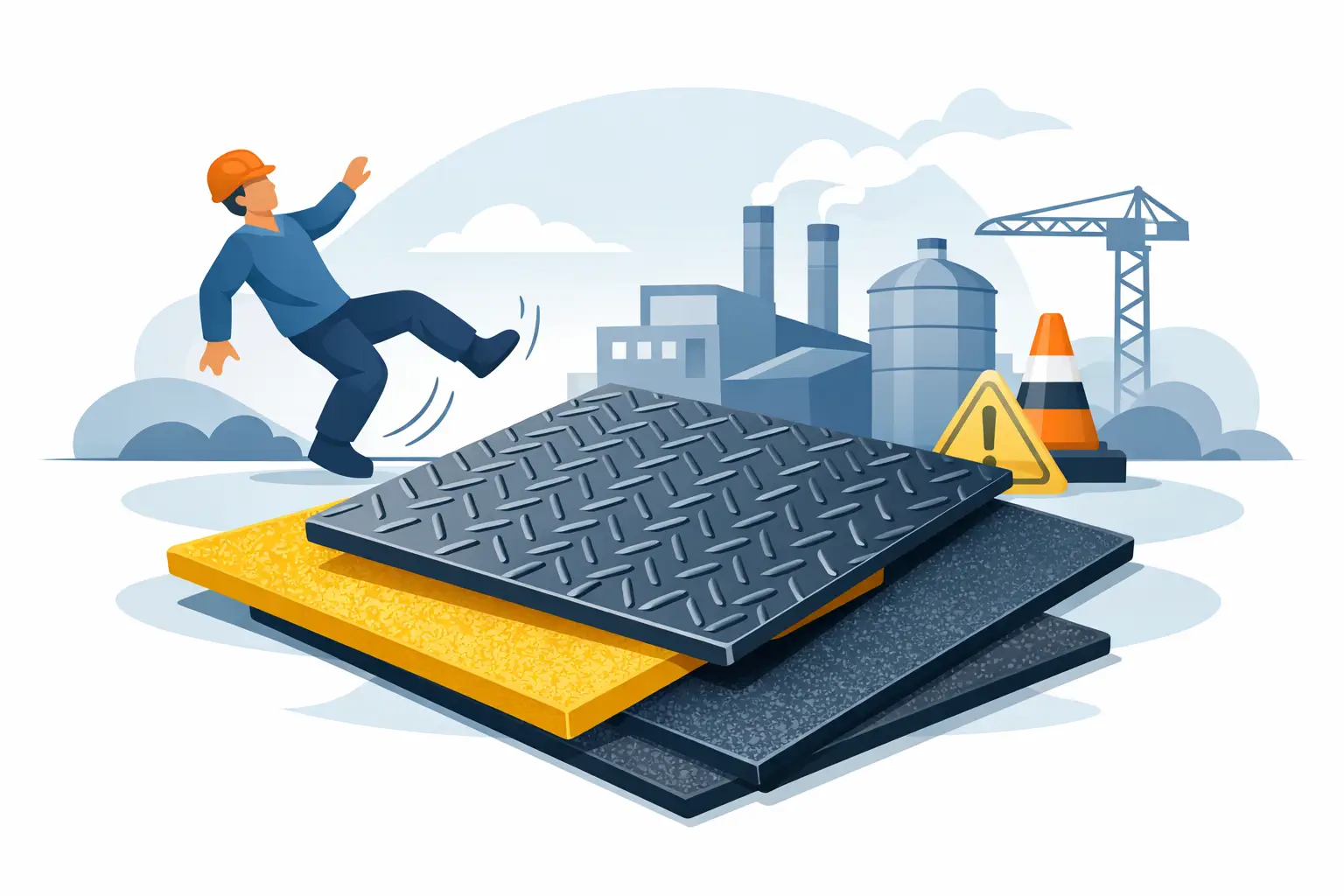
Anti Slip Floor Plates for Industry
Anti slip grp floor plates for industry reduce slips, corrosion issues and downtime across harsh sites with durable, compliant surface upgrades.