Stop Dropped Objects on Platforms: What Works
Practical guidance on how to prevent dropped objects on platforms using engineering controls, housekeeping and drop prevention systems for safer work.
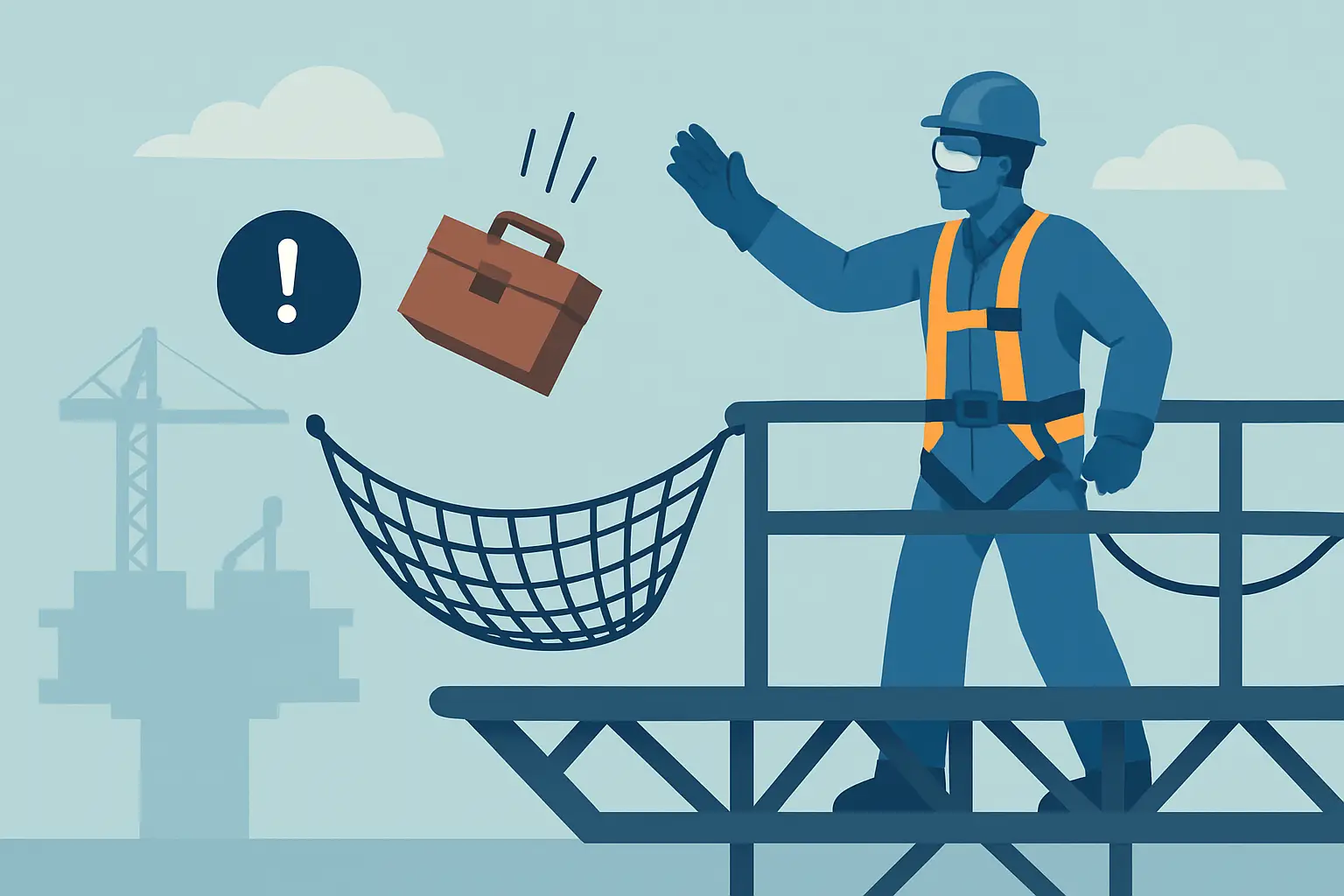
A spanner slipping off a grated deck can travel further than most incident investigations assume. On offshore and industrial platforms it does not need height to become high consequence a small item can ricochet off steelwork, pass through open grating, or reach an access way below. Preventing dropped objects is less about slogans and more about building physical barriers, controlling what is carried, and designing the platform so that “nothing can fall” is a realistic expectation.
Why dropped objects happen on platforms
Dropped objects on platforms typically come from three sources: people, the environment, and the structure itself.
People drop items because they are working one-handed, moving between levels, wearing gloves that reduce grip, or improvising tool storage. Environmental contributors include wind, vibration, rotating machinery, or a wet surface that forces a slip at the wrong moment. Structural contributors are often overlooked - open mesh flooring, gaps at edges, unprotected penetrations, and poor segregation of work areas mean that once an item is released, the platform gives it an easy path to the level below.
The most effective programmes treat dropped objects as a predictable energy transfer problem. If an object can be released, it will be. The control plan then becomes: reduce the likelihood of release, and when release still occurs, prevent travel and impact.
How to prevent dropped objects on platforms: start with hierarchy of controls
When HSE teams ask “how to prevent dropped objects on platforms”, the best answer starts with hierarchy rather than individual products.
Elimination and substitution are often limited in brownfield environments, but they still apply. If the task can be done at deck level rather than at height, you remove the exposure. If you can replace loose consumables with captive or pre-packed alternatives, you reduce the number of “free” items.
Engineering controls are where platforms usually see the largest, most auditable step-change. Administrative controls and PPE still matter, but they are less dependable in high-tempo operations or during shutdowns when multiple trades are working simultaneously.
Engineering the platform so dropped objects have nowhere to go
Open grating is common for drainage and weight reasons, but it is also a direct route for small tools, fasteners and debris. If you cannot change the deck type, focus on controlling the pathways.
Perimeter protection is the first pathway to close. A toe board helps, but it is not a complete control unless it is continuous, correctly sized, and maintained with no gaps at stanchions or corners. For areas with frequent handling of small items, barriers and kick plates need to be treated as part of the containment system rather than basic edge protection.
Next, address openings and interfaces. Penetrations around pipework, cable routes, and temporary access points are common drop routes. The “it’s only a small gap” logic fails quickly when washers, nuts and drill bits are involved. Closing gaps with fitted profiles, covers, or purpose-designed infill reduces the number of unpredictable drop paths.
Finally, consider secondary containment beneath work areas. Nets, under-deck barriers, and targeted catch systems are particularly effective below rig floors, walkways above access corridors, and maintenance zones where tools are frequently exchanged. They do not remove the need for good tool discipline, but they change the outcome when discipline slips.
Use dedicated drop prevention systems, not improvised storage
Improvised solutions such as cable ties used as tool retainers or plastic bags used for small parts tend to fail under vibration, UV exposure, salt spray, or repeated handling.
Purpose-designed drop prevention systems generally fall into four categories: barriers and barricades for exclusion and containment, nets for capture, pouches and tethers for tool control, and helideck safety nets for perimeter drop protection around aviation operations.
The trade-off is accessibility. More containment can introduce time costs if it makes routine inspection or access harder. The best installations are designed with the work patterns in mind frequent access routes should not become snag hazards, and containment should not push people into awkward postures that increase drop likelihood.
Control the worksite conditions that trigger drops
Engineering controls are strongest when they sit on top of stable conditions. Platforms that are wet, contaminated, or poorly organised create the moments where hands slip, feet slide, and objects are released.
Housekeeping that targets the small stuff
Housekeeping on platforms is not just about removing trip hazards. It is specifically about preventing small items from becoming mobile. Swarf, off-cuts, cable ties, and loose fixings tend to accumulate near handrails, skids, and around access ladders - exactly where dropped objects can migrate.
A practical approach is to define “small parts control zones” in areas with open grating or where work occurs above walkways. In those zones, use contained parts trays, closeable bins, and end-of-shift line checks that focus on fasteners and consumables rather than general cleanliness.
Anti-slip underfoot reduces the drop rate
A significant portion of dropped-object events begin as a slip, trip, or sudden loss of balance. If a technician catches themselves, the tool is often what gets released.
Improving underfoot stability is therefore a dropped-object control, not only a slips-and-trips control. In harsh environments offshore, coastal assets, process plants with oils, and wind transition pieces with persistent moisture the surface choice directly affects grip confidence and hand stability during carry.
Non-metallic anti-slip surfaces and retrofitted covers can reduce the need for cautious, two-step movement that encourages people to “manage” loads mid-walk. The key is using a system that maintains grip when wet and contaminated and does not corrode or delaminate under service conditions.
Wind and vibration: design assumptions that should be explicit
On exposed platforms, wind is not a rare event. If routine tasks require placing items on flat surfaces, wind will eventually move them. Similarly, vibration from rotating equipment can “walk” parts towards edges.
Controls should be explicit: no loose items placed on handrails or kick plates; use of closeable pouches; magnetic trays where appropriate; and defined laydown areas with raised lips or containment. If the platform experiences regular vibration, inspect fasteners, clamps, and fittings that can loosen and fall as “static drops” objects that fall without human handling.
Tool and material control that is workable on shift
Drop prevention fails when it is designed as an ideal-state procedure that slows work to a halt. The aim is a system that technicians will follow under pressure.
Tool tethering is effective, but only when tether points and lanyards are rated, compatible with the tools, and do not introduce entanglement hazards. It depends on task type: tethering is usually well suited to repetitive work at height and less suited to tasks where tools are swapped frequently, unless the pouch system supports fast changeover.
For consumables, reduce “free carry”. Pre-package fixings per job, use closeable fastener bags, and avoid open-top containers on ladders or mobile access. If personnel must carry items between levels, specify a closed bag or bucket with a captive lid rather than relying on a gloved grip.
A common trade-off is speed versus control during shutdowns. When schedule pressure is high, the temptation is to carry more at once. Setting realistic material staging points and enforcing containerised carry prevents the sudden overload that leads to drops.
Manage the zone below: exclusion is a control, not a slogan
Even with strong controls, you must assume an object can still fall. The zone below should be treated as a managed risk area.
Exclusion zones are most effective when they are physical. Tape and signage degrade quickly in busy plants. Barricades that are quick to deploy, clearly visible, and designed for industrial conditions create a boundary that holds during a shift change and does not rely on verbal reminders.
Where access is essential, overhead protection and under-deck netting can be a better solution than repeated stop-start exclusion. This is particularly relevant on multi-level platforms where access corridors cannot be closed for long periods without operational impact.
Inspection and assurance that catches the “static drop” risks
Dropped-object prevention often over-focuses on tools and ignores fixtures. Cable trays, lighting, junction boxes, handrail fittings, and temporary works can all shed parts.
Assurance should include targeted checks for loose components, missing fasteners, corrosion-related degradation, and anything that can vibrate free. In corrosive or maritime environments, non-metallic composite components can reduce corrosion-driven failures, but they still need inspection for mechanical damage and correct installation.
Data helps. Track near misses and dropped-object reports by location, task type, and object category. Patterns usually emerge: a particular platform edge where toe boards are damaged, a particular access route where people regularly carry items, or a particular maintenance activity that generates small loose parts. The control plan should then be adjusted at that point of use, not rewritten as a general procedure.
Selecting materials that support long-term control
Platform upgrades often fail because the control does not survive the environment. If a barrier corrodes, a cover delaminates, or an anti-slip layer wears smooth, the hazard returns.
In aggressive environments, non-metallic GRP composite systems are frequently selected because they are lightweight, non-corrosive, and low maintenance. The operational advantage is not just reduced replacement cost - it is reduced downtime and fewer degraded control points that need emergency repair. This is especially relevant in renewables and coastal infrastructure where long service life expectations are high and access windows are limited.
If you are specifying surface covers, gratings, profiles, or drop prevention components, treat installation quality as part of performance. Poorly fitted edges and inconsistent interfaces create gaps - and gaps are where small objects go.
Real Safety supplies engineered anti-slip and drop prevention systems for industrial platforms, including non-metallic GRP components and application-led upgrades across stairs, walkways, ladders and perimeter protection (https://Realsap.com).
Closing thought
The most reliable dropped-object programmes stop relying on perfect behaviour. They assume objects will be released, then build platforms that contain, capture, or block travel so a momentary slip of the hand does not become a life-changing event below.
Similar Articles

Non Metallic Cable Trays for Industrial Environments
Non metallic cable trays for industrial environments. Discover the benefits of corrosion resistance, lower weight, electrical safety, and reduced maintenance.
GRP Grating vs Steel Grating: Which Is Safer for Your Workplace?
Choosing between GRP and steel grating? Compare safety, durability, maintenance, and performance for industrial environments.
Anti Slip Floor Plates for Industry
Anti slip grp floor plates for industry reduce slips, corrosion issues and downtime across harsh sites with durable, compliant surface upgrades.