
What are GRP composites used for in industry?
What are GRP composites used for in high-risk sites? See where GRP improves grip, corrosion resistance and compliance on stairs, walkways and ladders.
A steel stair tower on a coastal asset can look perfectly serviceable at handover - then salt, moisture, process contamination and foot traffic get to work. Within a few seasons you are managing corrosion, repainting, replacing fixings and fielding near-miss reports as the surface polishes and loses bite. This is the point at which many sites stop asking whether a material is “strong enough” and start asking whether it is still a reliable risk control after years of exposure.
That is the practical lens for the question: what are GRP composites used for? In heavy industry, glass-reinforced plastic (GRP) is specified less as a “plastic alternative” and more as a non-metallic engineering material that maintains performance where corrosion, weight and maintenance constraints make traditional options a liability.
What makes GRP composites useful as a safety control
GRP composites combine glass fibres with a resin matrix to produce components that can be engineered for stiffness, load performance, surface friction and environmental resistance. In industrial settings, the attraction is rarely a single property. It is the combination.
Non-metallic construction removes a primary failure mode found in carbon steel and even in some stainless installations: progressive corrosion at cut edges, fixings, interfaces and crevices. In parallel, GRP can be manufactured with aggressive anti-slip surfaces that deliver traction under wet, oily or otherwise contaminated conditions - the scenario behind a large proportion of slips and falls.
There are trade-offs. GRP is not a universal replacement for steel. Temperature limits, fire performance requirements, local impact risks and the method of fixing into existing substrates all influence suitability. UV exposure, chemical compatibility with specific process media and electrical bonding requirements can also be deciding factors. The correct approach is application-led selection, supported by datasheets and a clear view of duty, environment and inspection regime.
What are GRP composites used for on stairs and access ways?
Stairs are one of the most common locations for recordable incidents because they combine changes in elevation with high traffic. GRP is widely used here in the form of step covers, step nosings, stair treads and landing covers, primarily to control slip risk while resisting corrosion.
On outdoor stairways, a GRP anti-slip surface keeps grip more consistent across rain, frost, sea spray and airborne contamination. Because the material is non-corrosive, you are not relying on paint systems to preserve both integrity and traction. This matters on ageing assets where repainting cycles are expensive, disruptive and often constrained by access permits.
On indoor or process-adjacent stairs, chemical splash, condensate and fine particulates can quickly compromise smooth chequer plate or coated surfaces. A bonded or mechanically fixed GRP cover can provide a defined friction surface and a visual edge, supporting safer foot placement and helping with site standards for demarcation.
It depends on the structure beneath. Where the substrate is badly degraded, covering alone is not a fix - you still need structural assessment. But on many facilities, stair covers and nosings are a targeted upgrade that delivers immediate risk reduction with minimal downtime.
Walkways, platforms and deck areas: traction plus drainage
Walkway covers, deck strips and GRP gratings are common answers when a platform needs both reliable grip and a surface that sheds liquids and debris. GRP grating provides open-area drainage, which reduces standing water and helps manage slip risk at source.
In oil and petrol and marine environments, walkways see a mix of water, hydrocarbons, drilling residues and cleaning chemicals. The surface choice is as much about contamination tolerance as it is about dry friction. GRP anti-slip systems can be specified with graded aggregates to match the expected conditions - for instance, more aggressive surfaces for frequently wet or oily zones, and slightly smoother profiles where cleaning regimes and pedestrian comfort are dominant.
Again, the trade-off is context. Overly aggressive grit can increase wear on footwear and may not be desirable where personnel are kneeling or handling equipment at floor level. Conversely, a mild surface may not provide sufficient margin in high-consequence areas. The right specification is based on the hazard, not preference.
Ladders and vertical access: consistent footing where it matters
Ladder rung covers and GRP ladder safety components are used where a single slip can have severe consequences. Rungs can become polished, contaminated or ice-prone, and conventional approaches such as paint-on grit are frequently short-lived.
A properly fitted rung cover introduces a consistent, high-friction interface that is easier to maintain and inspect than ad-hoc coatings. The benefit is not just “more grip”, but reduced variability. For HSE teams investigating incidents, variability is often the real problem: the rung that is fine in the morning becomes hazardous after a washdown or a process upset.
Vertical access also raises questions around material compatibility. On structures where metal-to-metal interfaces accelerate corrosion, non-metallic rung covers and profiles can help reduce galvanic issues at contact points. That said, you still need to consider fixings, ladder compliance and any site requirements around earthing and bonding.
Handrails, guardrails and profiles: corrosion resistance with predictable upkeep
GRP handrails, profiles and modular safety systems are used extensively on coastal assets, water treatment works, chemical processing areas and other corrosive locations. The value proposition is straightforward: the system remains stable and presentable without constant repainting.
For operations teams, the “maintenance-free” argument is less about marketing and more about planning certainty. If a handrail system is unlikely to require coating repairs, you remove a recurring task from the maintenance backlog, reduce work at height exposure and avoid frequent isolation of access routes.
Engineering teams typically look at stiffness, deflection, fixing method and compatibility with existing steelwork. GRP can be designed to meet project needs, but you cannot assume a like-for-like swap without checking spans, loading and interfaces. Where there is a risk of impact from moving equipment, you may choose local protection or hybrid solutions.
Cable management: cable trays in harsh environments
Cable trays and supports are an established GRP application, particularly where corrosion, chemical exposure or electrical considerations make metallic trays less desirable. Offshore and coastal facilities face accelerated degradation of metal systems, and tray failures create both operational and safety risks.
GRP cable trays offer non-corrosive performance and can reduce maintenance interventions in congested areas where access is difficult. They are also lighter, which can simplify installation and reduce manual handling risk. The usual selection questions are chemical compatibility, UV exposure for external routes, and ensuring the system meets any project requirements around fire performance and smoke toxicity.
Marking and route definition: escape routes and high-visibility controls
Escape route markings and demarcation products are not always top of mind when discussing composites, but in practice they are part of the same risk-control strategy. In poor weather, low light or emergency conditions, clearly defined routes reduce hesitation and wrong turns.
Composite-based marking systems and walkway delineation can be engineered to remain visible and bonded in the face of abrasion and washdown. The purpose is operational: support controlled movement, reduce interaction between pedestrians and equipment, and improve response in an evacuation scenario. If your escape routes are on exposed decks or around rotating equipment areas, durability and long-term adhesion become as important as initial brightness.
Drop prevention and perimeter safety: containing the consequences
Not all GRP composite solutions are underfoot. Barriers, nets, pouches, barricades and helideck safety nets form part of a broader safety envelope on high-consequence assets. Their role is to prevent dropped objects, restrict access to hazardous areas and reduce the likelihood that a minor lapse becomes a major event.
Material selection here is more nuanced. You may prioritise UV stability, resistance to salt spray, ease of inspection and the ability to withstand repeated handling. Composite elements can contribute where you want strength-to-weight advantages or corrosion resistance, but the system must be assessed as a whole, including fixings and anchor points.
Sector examples: where GRP is typically specified
In oil and petrol, GRP composite anti-slip products are routinely used on rig access points and working areas where surfaces are exposed to drilling fluids, sea spray and regular washdowns. Step covers, deck strips and grating upgrades are common because they target the most frequent cause of injuries: loss of footing.
In renewables - particularly offshore wind - weight and lifecycle planning are major drivers. Non-metallic, long-service-life components reduce the burden of corrosion management, and the weight advantage can simplify installation and retrofits. Many operators also value predictability: a system designed for a minimum 25-year service life supports whole-life cost control and planned maintenance strategies.
In construction and infrastructure, GRP is often chosen for bridges, access structures, water and wastewater sites and coastal public assets where corrosion risk is high and maintenance access is limited. In nuclear and other tightly regulated environments, the focus tends to be on controlled performance, traceability and minimising ongoing interventions in sensitive areas.
Selecting GRP for your site: what to evaluate
The best GRP specification starts with the hazard and the environment, then works back to product form. If the priority is slip reduction, you need to define contamination type, traffic level and cleaning regime so the anti-slip surface is neither under-specified nor unnecessarily harsh. If the priority is corrosion resistance, you need to understand the exposure: salt, acids, alkalis, solvents, UV and temperature all matter.
Pay attention to interfaces. Many long-term failures are not in the GRP itself, but in fixings, edge details, adhesive choice or poor preparation. Installation methodology should be treated as part of the design, especially where you are upgrading live assets and downtime is limited.
For teams building a multi-area upgrade plan - stairs, walkways, ladders and perimeter controls - it is usually more efficient to work with a supplier that can align specifications across the site, provide consistent datasheets and support an application-led selection process. Real Safety does this with a catalogue of GRP anti-slip and composite safety systems for high-risk environments, backed by project experience since 2007 - see https://Realsap.com.
A useful final test is simple: if the surface is wet, contaminated and three years older than you would like, would you still trust it with someone carrying tools down a stair flight. Specify for that day, not for commissioning day.
Similar Articles

Dropped Object Netting That Actually Controls Risk
Dropped object prevention netting reduces falling-object risk on rigs, wind and industry. Learn where it fits, how to specify it, and avoid gaps.

Choosing an Anti Slip Safety Provider
Choose an anti slip safety solutions provider that delivers compliance, proven grip, low downtime and long service life in harsh environments.
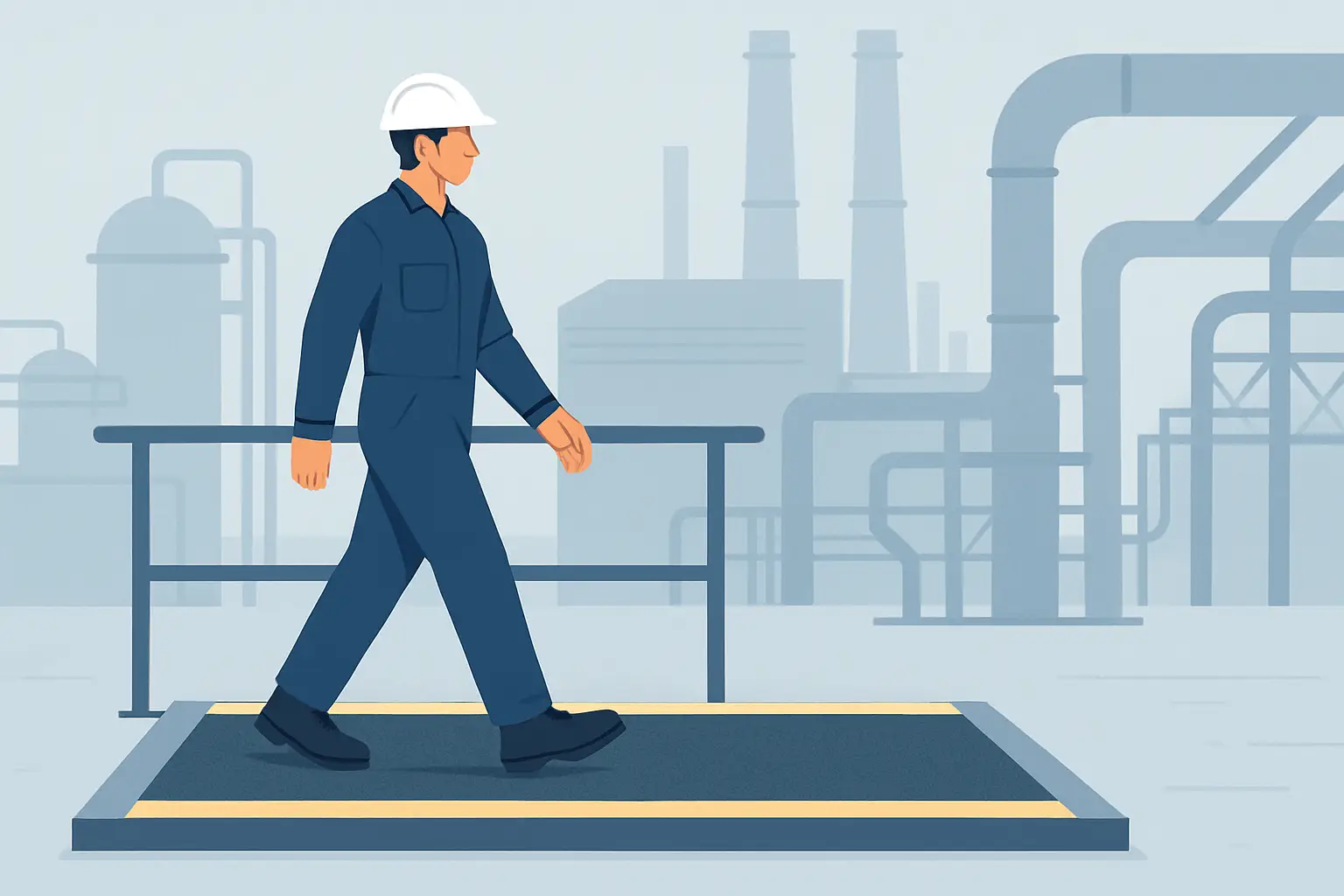
Anti-Slip Walkway Covers for Heavy Industry
Anti slip walkway covers for industry reduce slips in harsh sites. Learn materials, fixings, compliance and selection for long-life, low upkeep control.