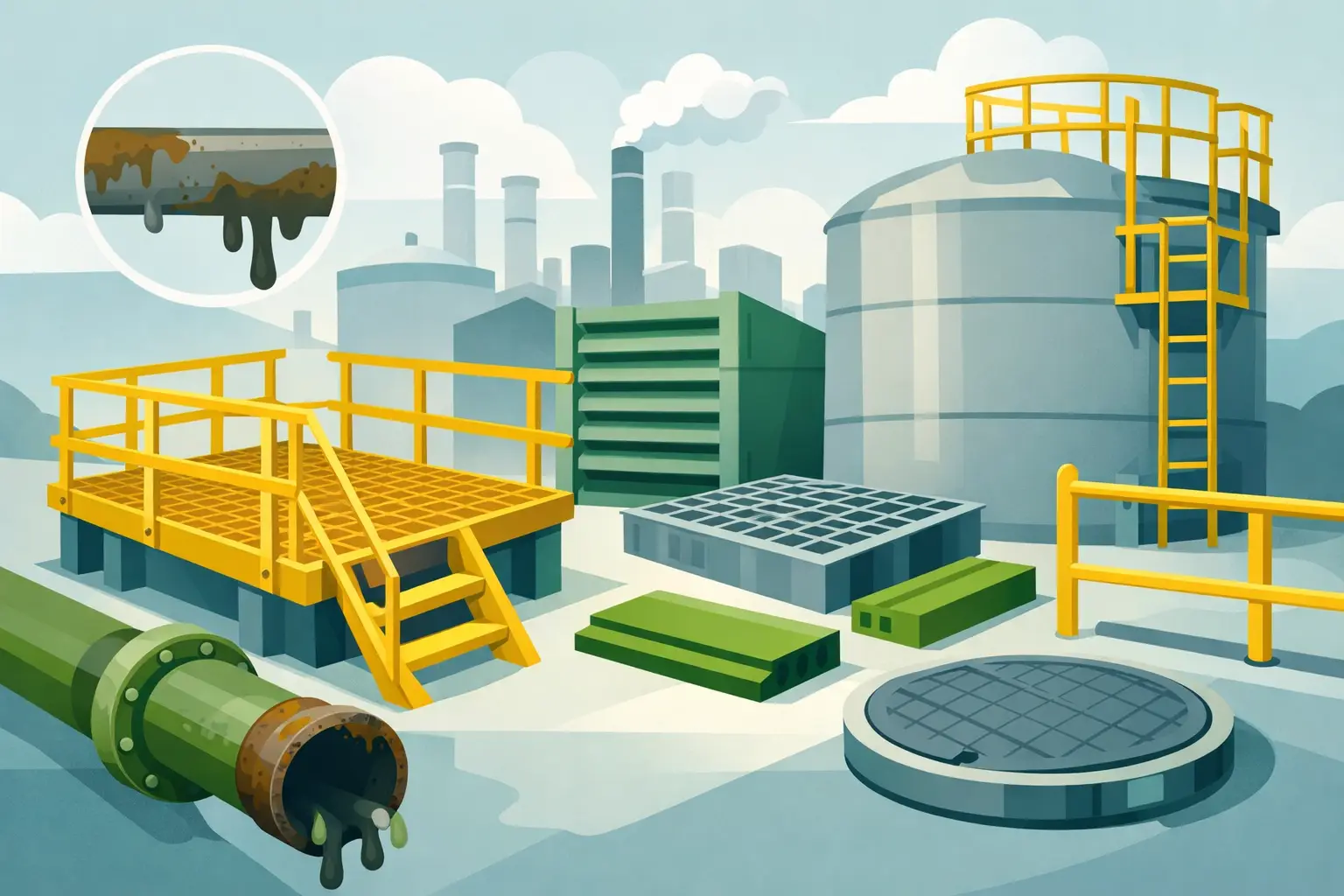
Top GRP Products for Corrosive Environments
Top GRP products for corrosive environments that improve safety, cut maintenance and support compliance across industrial and marine assets.
Corrosion rarely arrives as a single failure point. It shows up as weakened access systems, unsafe walkways, recurring maintenance shutdowns and rising risk around stairs, platforms and escape routes. That is why selecting the top GRP products for corrosive environments is not simply a material choice. It is an operational decision that affects safety performance, compliance and whole-life cost.
In chemical processing, offshore energy, desalination, maritime infrastructure and hygiene-critical production areas, conventional steel often creates a maintenance cycle that is hard to justify. Coatings degrade. Surface oxidation returns. Weight becomes a constraint. In many of these settings, GRP composites offer a more practical route particularly where slip risk and corrosion are present at the same time.
Why GRP performs in corrosive service
GRP is specified in harsh environments because it solves several problems at once. It is non-corrosive, lightweight and non-conductive, which matters in areas exposed to chemicals, saltwater, washdown regimes and electrically sensitive plant. It also supports low-maintenance asset strategies where access equipment must remain serviceable without frequent surface treatment or replacement.
That does not mean every GRP product suits every duty. Resin system, load requirement, span, fixing method and exposure class all need to match the application. A pedestrian walkway in a water treatment plant has different demands from a cable support system on an offshore platform or a ladder access point in a marine engine room. The right approach is application-led rather than material-led.
Top GRP products for corrosive environments by application
GRP gratings for walkways and platforms
Structural GRP grating is usually the first product considered where corroded steel flooring or slippery plated surfaces are creating a combined safety and maintenance issue. In process plants, ports, offshore installations and utilities infrastructure, gratings provide open-area drainage, underfoot slip resistance and corrosion resistance in one system.
Moulded grating is often preferred where bidirectional strength and chemical resistance are priorities. Pultruded grating tends to suit longer spans and more directional loading. The trade-off is straightforward: moulded options are versatile in layout and cut-outs, while pultruded profiles can be more efficient where structural performance across span is the main driver.
For HSE and maintenance teams, the practical advantage is not just service life. It is the ability to upgrade deteriorated access zones without introducing another high-maintenance asset into the plant.
GRP stair treads, step covers and nosings
Stairs are one of the first places where corrosion and slip risk combine into a frequent incident hazard. In refineries, marine assets, food production areas and treatment plants, the front edge of the step often degrades first, especially where water, oils or aggressive cleaning regimes are involved.
GRP stair treads, step covers and step nosings are effective because they address substrate deterioration and underfoot grip together. They can often be installed over existing steps, which reduces downtime and avoids full stair replacement. That matters where shutdown windows are tight or where access routes cannot be taken out of service for extended works.
There is an important distinction here. If the base stair remains structurally sound, an over-clad anti-slip solution may be the most efficient option. If the steelwork itself has lost integrity, a full GRP stairway system is usually the safer long-term decision.
GRP walkway covers and landing covers
Not every problem area needs a structural rebuild. In many facilities, the issue is localised surface deterioration on landings, gangways or transition zones where pedestrians move between process areas. GRP walkway covers and landing covers are suited to these retrofit situations, particularly where the objective is to restore grip, isolate damaged surfaces and improve housekeeping standards quickly.
These systems are commonly used in plants where wet processing, chemical splash or routine washdown creates persistent floor-level hazards. They also work well in public-facing infrastructure where slip prevention must be improved without disruptive civil works.
The main consideration is substrate condition. Covers perform best when installed onto a stable base. If the deck beneath is significantly compromised, replacement rather than overlay is the more defensible route.
GRP ladders and ladder rung covers
Vertical access points are often overlooked until an inspection flags corrosion, poor footing or non-compliance. In corrosive environments, fixed ladders can become a high-consequence risk because both the structural element and the contact surface are affected over time.
GRP ladders offer a non-metallic alternative for areas exposed to salt spray, chemicals or moisture. Ladder rung covers are a targeted solution where the existing ladder remains structurally acceptable but the rung surface needs improved grip and visibility. For offshore, maritime and utility settings, this can be a practical intervention that extends safe service without major replacement works.
As with stairs, the deciding factor is whether the existing asset has sufficient integrity. Anti-slip upgrades are valuable, but they should never be used to mask a structural defect.
GRP cable trays and pultruded profiles
Corrosive environments do not just affect people-moving infrastructure. They also affect cable management and secondary support structures. GRP cable trays and pultruded profiles are widely used where metallic systems are vulnerable to aggressive atmospheres, coastal exposure or chemical attack.
In energy, water treatment and industrial processing, non-metallic cable support can reduce maintenance burden and avoid premature replacement. Pultruded profiles are also used to build bespoke frames, support members and access structures where weight and corrosion resistance must be balanced.
This is one of the clearest examples of lifecycle value. The initial specification may be more considered than standard galvanised steel, but recurring coating repair, corrosion inspection and replacement intervals are typically reduced.
GRP stairway and access systems
Where existing steel access has reached end of life, piecemeal product replacement can become inefficient. A complete GRP stairway or access platform system is often the better choice for plants that need a compliant, corrosion-resistant solution across multiple levels, walkways and landings.
This approach is common in offshore topsides, chemical dosing areas, desalination plants and coastal assets where access structures are exposed continuously. The advantage is consistency across the system - treads, handrails, gratings and support members are engineered as one solution rather than assembled from mixed materials with different maintenance profiles.
The trade-off is capital approval. Full replacement demands a larger immediate investment, but it can eliminate repeated local repairs that continue to disrupt operations.
Choosing the right product for the hazard
The best GRP specification starts with the failure mode. If the issue is underfoot slip on otherwise sound stairs, anti-slip step covers may be enough. If the issue is structural corrosion in access platforms, structural grating and pultruded members are more appropriate. If electrical isolation or weight reduction matters as much as corrosion resistance, that should be built into the selection process from the outset.
Buyers should also look closely at installation constraints. Retrofit products are valuable because they minimise downtime and often avoid structural replacement. However, retrofit is not automatically the right answer. In high-consequence areas such as escape routes, rig access points or elevated work platforms, a short-term overlay on a failing substrate may only defer a larger problem.
Chemical compatibility is another point that should not be generalised. Not all corrosive environments are the same. Acid exposure, saline conditions, hydrocarbon contamination and aggressive cleaning agents place different demands on resin systems and surface finishes. Datasheet review and application assessment matter more than broad claims about corrosion resistance.
Where these products deliver the most value
The sectors are consistent. In oil, petrol and wind, weight-sensitive structures and offshore exposure favour non-metallic systems. In maritime settings, saltwater and fuel environments make corrosion control a constant concern. In water treatment, desalination and chemical processing, aggressive media and wet access routes create both asset degradation and slip hazards. In food and pharma, washdown, hygiene and reliable footing are often as important as material durability.
For each of these sectors, the strongest case for GRP is not novelty. It is predictability. A well-selected composite product can reduce inspection findings, cut maintenance interventions and improve stability underfoot in the same project scope. That is a stronger outcome than replacing like-for-like steel and planning to manage the same failure pattern again.
Where buyers need project-led support across stairs, walkways, ladders and structural access, suppliers with sector experience and compliance-focused specification support tend to add the most value. That is especially true when upgrades must be phased around live operations, as is often the case on industrial and infrastructure assets.
A sensible GRP strategy starts with the area that presents the highest combined risk - corrosion, slipping potential and maintenance burden. Once that first application is corrected properly, the wider replacement programme usually becomes much easier to justify.
Similar Articles

Non Metallic Cable Trays for Industrial Environments
Non metallic cable trays for industrial environments. Discover the benefits of corrosion resistance, lower weight, electrical safety, and reduced maintenance.
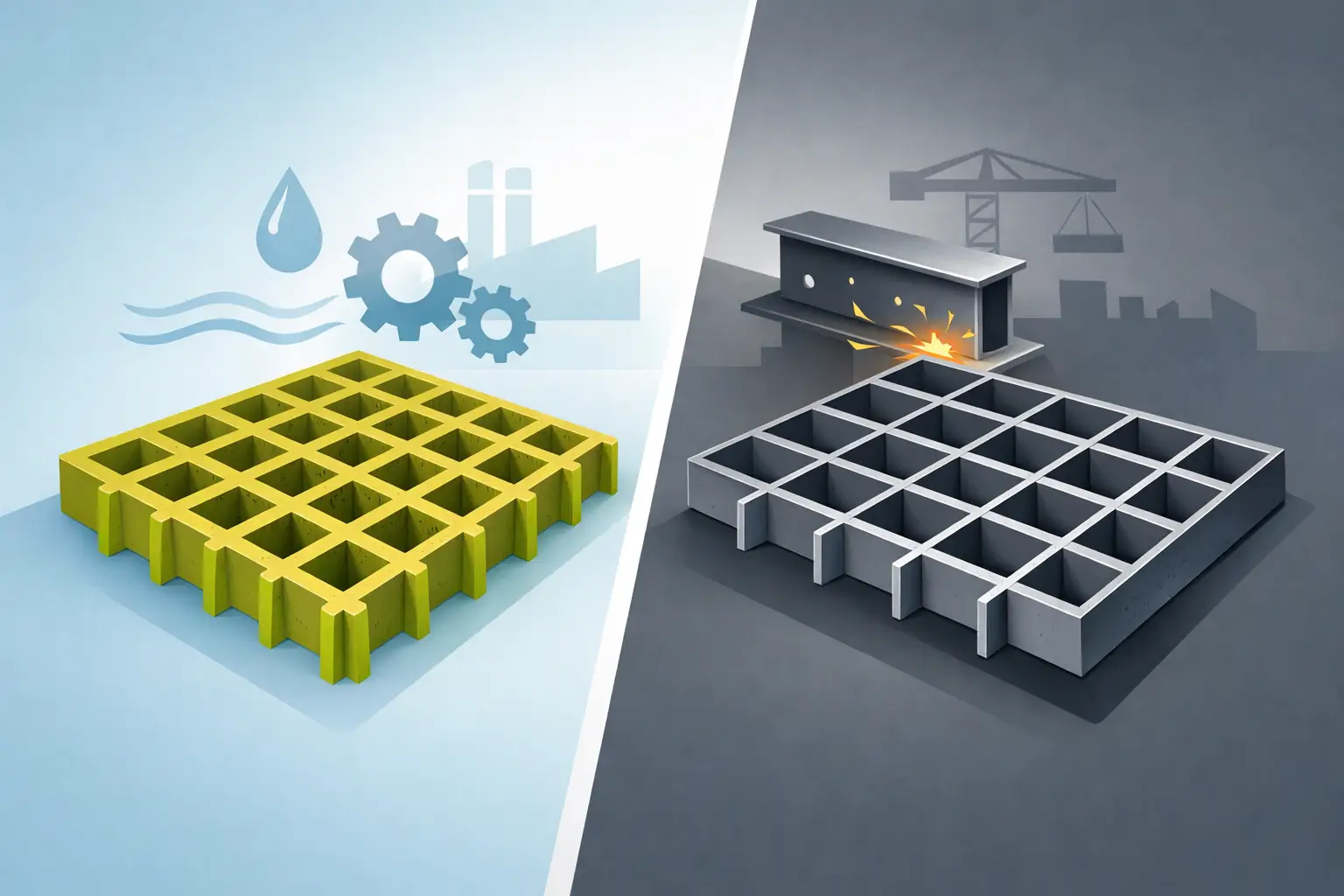
GRP Grating vs Steel Grating: Which Is Safer for Your Workplace?
Choosing between GRP and steel grating? Compare safety, durability, maintenance, and performance for industrial environments.
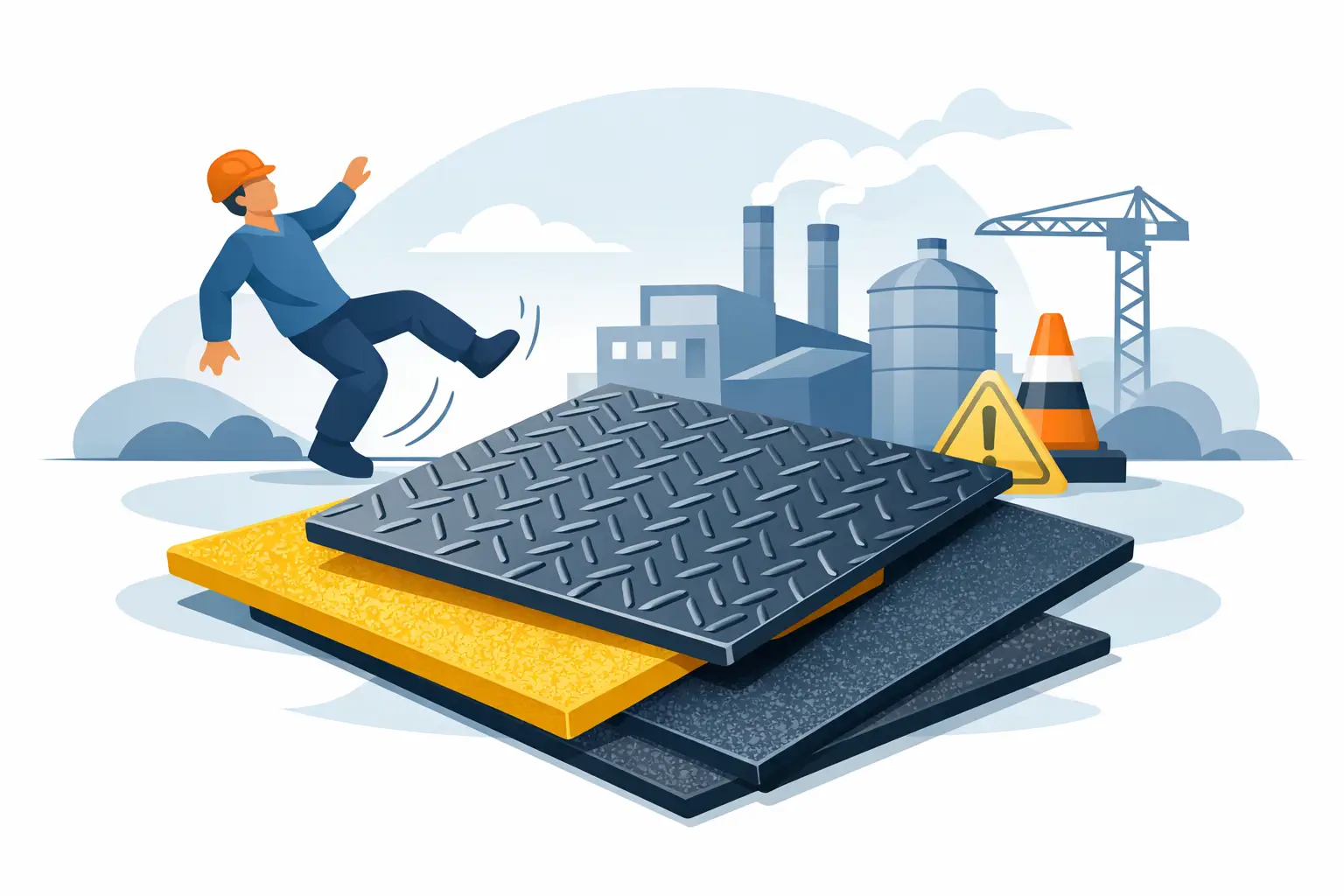
Anti Slip Floor Plates for Industry
Anti slip grp floor plates for industry reduce slips, corrosion issues and downtime across harsh sites with durable, compliant surface upgrades.